

As stablecoins move closer and closer to mainstream financial infrastructure, the regulatory debate around them is seemingly becoming less about crypto in isolation and more about the future outlook of the global payments system.
Just recently, for instance, Bank of England Governor Andrew Bailey warned that global regulators may be heading for a “wrestle” with the US over stablecoin rules. Essentially, this underscored a growing divide between European, American, and other regional approaches.
But for some, this disagreement reflects a deeper question.
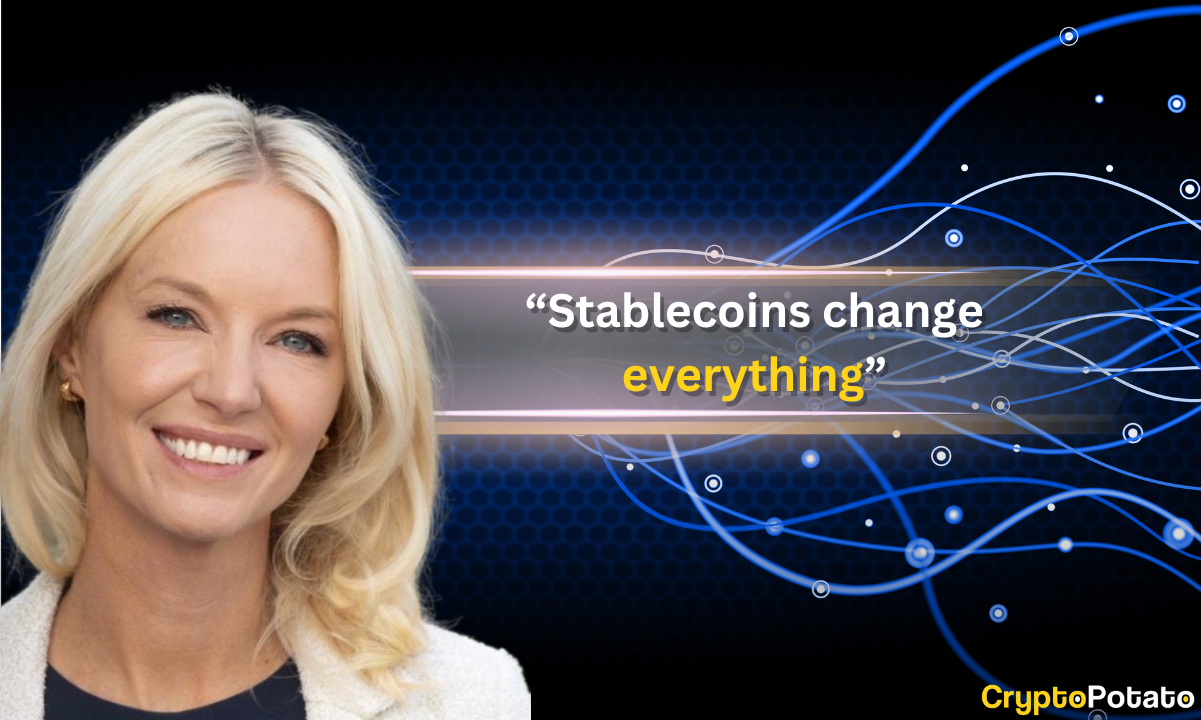
CryptoPotato talked to Jody Mettler, Chief Operating Officer of BitGo and President of BitGo Trust. According to her, the question is whether digital money develops into a single interoperable global system or into parallel networks shaped by regional priorities centered around monetary sovereignty, reserve standards, custody, settlement finality, consumer protection, and more.
In the following interview, Mettler discusses how MiCA is shaping Europe’s digital asset infrastructure, why institutions are demanding banking-grade certainty (rather than abstract “crypto rules”), and how stablecoins can force banks, issuers, custodians, and payment providers to rethink the architecture of cross-border finance.
Governor Andrew Bailey warned that global regulators may be heading for a “wrestle” with the U.S. over stablecoin rules. From your vantage point, what is the real disagreement underneath that fight: consumer protection, financial stability, dollar dominance, or control over payment rails?
The conversation has moved well beyond crypto regulation in isolation. What’s really being debated underneath the “wrestle” Andrew Bailey refers to is how modern payment and settlement infrastructure gets designed, and which standards end up defining it globally.
At BitGo, what we see in practice is that institutions are not asking for “crypto rules” so much as they are asking for banking-grade certainty around custody, settlement finality, and redemption mechanics. That is where the regulatory divergence starts to matter. The U.S. is generally leaning toward a more market-led framework that encourages innovation and participation, while Europe is building a more prescriptive system through MiCA that prioritizes systemic stability, reserve quality, and controlled market entry.
In Europe specifically, there is also a more explicit policy objective around financial autonomy. That shows up in the focus on ensuring euro-denominated digital money and regulated stablecoin frameworks can develop alongside, rather than be fully dependent on, dollar liquidity and U.S. dominated payment rails. But that ambition only really works if the underlying infrastructure exists to support it. That means deep liquidity, regulated custody, banking connectivity, and trusted settlement layers that institutions can actually plug into at scale.
So underneath the policy language, the real tension is less about any single rule and more about whether global digital money evolves into a single interoperable system or a set of parallel, regionally anchored financial networks.
When people talk about the U.S. and Europe “diverging” on stablecoins, what does that actually mean in practice for issuers, custodians, banks, and payment companies?
It means the market is starting to split less around “crypto vs traditional finance” and more around how each region chooses to define and control the plumbing of digital money.
Europe has moved earlier with MiCA, which is not just about licensing crypto firms, but about standardising how custody, issuance, trading, and transfer of digital assets work across the entire EU under one supervisory perimeter. That creates a more predictable environment for institutions, because they can build against a single framework rather than 27 different interpretations. The U.S., meanwhile, is still in the process of defining its market structure through legislation like the Clarity Act, so the roles of different participants in the stack are still being actively negotiated.
From BitGo’s perspective in Europe, that difference shows up in very practical ways. Institutions are not asking abstract questions about regulation, they are asking how assets are actually held in bankruptcy remote structures, how settlement finality is achieved across venues, and how they can move liquidity between regulated counterparties without changing their risk assumptions every time they cross a jurisdictional boundary. That is where MiCA starts to matter operationally, because it turns policy into something closer to a defined rulebook for custody and market access.
The tension, then, is that global institutions still want a single operating model for digital assets, but the infrastructure they are plugging into is becoming regionally defined. Over time, that raises a real question about whether liquidity, custody standards, and settlement systems converge globally or whether they develop into parallel but interoperable regional stacks.
If stablecoins become a major part of cross-border payments, what happens when the rules for reserves, redemption, custody, and supervision differ from one jurisdiction to another?
MiCA helps because it creates a single rulebook across Europe, which gives institutions a much clearer operating environment. That’s important because it reduces a lot of the fragmentation we used to see inside the EU. But once you move outside Europe, you’re still dealing with different approaches in different markets.
And that’s where it gets operational. Cross-border payments depend on trust that assets behave in a predictable way as they move through different systems. If that starts to differ too much, you get friction in liquidity and settlement even if the markets are linked.
What BitGo is focused on in Europe is helping institutions operate within MiCA, but still stay connected to global liquidity. So regulated custody, segregated client assets, and infrastructure that makes it possible to move and settle assets without having to rebuild everything market by market.
Are we heading toward a single global stablecoin market, or toward competing blocs: dollar stablecoins under U.S. rules, euro stablecoins under EU rules, and sterling- or other local models elsewhere?
In the near term, we’re more likely to see regional frameworks emerge first. The dollar will probably continue to dominate because it already sits at the center of global liquidity and trade, but Europe is clearly trying to ensure it has its own regulated digital financial infrastructure as well. The bigger question is whether these systems remain interoperable over time or whether we start seeing more fragmented pools of liquidity tied to different jurisdictions.
How should policymakers think about the line between stablecoins as crypto products and stablecoins as payment or banking infrastructure? At what point do they stop being an asset class and start becoming part of the monetary system?
That shift might happen once stablecoins start being used at institutional scale for settlement, treasury operations, and cross border movement of funds. At that point, they stop behaving like purely speculative assets and start interacting much more directly with payment systems and financial infrastructure. That’s why custody, segregation of assets, settlement finality, and regulatory oversight become so important. Institutions need these systems to operate with the same confidence and safeguards they expect from traditional financial infrastructure.
Europe has been more explicit about protecting monetary sovereignty in its digital-assets framework. Is the stablecoin debate really also a debate about whether Europe can build payment infrastructure that is not dependent on U.S. dollar rails?
That’s definitely part of the underlying discussion. Europe is thinking carefully about how to maintain influence over its own financial infrastructure as digital money and stablecoin adoption continue to scale globally. Right now, most liquidity and activity still sits around dollar-backed stablecoins, so there’s a broader question around whether Europe can develop euro-denominated digital assets and payment rails that are competitive, liquid, and usable at institutional scale.
The challenge is that creating a successful euro stablecoin ecosystem requires more than regulation alone. It needs deep liquidity, trusted custody providers, settlement infrastructure, banking connectivity, and institutional participation across the region. That’s part of why MiCA matters. It gives firms a clearer framework to start building those networks and infrastructure layers within Europe rather than relying entirely on external rails over time.
Looking five years ahead, do you think stablecoins will be absorbed into the existing financial system, or will they force banks and payment networks to fundamentally change how they operate?
It’ll probably be a combination of both. Traditional financial institutions are already integrating parts of digital asset infrastructure into existing systems, especially around custody, settlement, and payments. But stablecoins also introduce expectations around real-time settlement, 24/7 movement of value, and programmable infrastructure that traditional systems weren’t originally designed for. Over time, parts of the banking and payments ecosystem will need to evolve to meet those expectations.
Innlegget Stablecoins Are Becoming a Fight Over the Future of Digital Money: Interview With BitGo COO Jody Mettler dukket først opp på CryptoPotato.












 Norsk bokmål
  English
  Română
  Eesti
Eesti  한국어
한국어  日本語
日本語  Русский
  Deutsch
  Español
  简体中文
简体中文  Français
  繁體中文
繁體中文  Português
  Italiano
  Polski
  Türkçe
  Nederlands
  Bahasa Indonesia
  Ελληνικά
  Українська
  Български
  Čeština
  Suomi
Suomi  Magyar
  Latviešu valoda
  Lietuvių kalba
  Slovenčina
  Slovenščina
  Svenska
Legg igjen en kommentar