

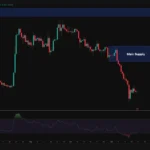
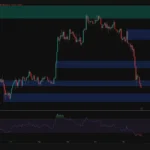
Bitcoin (BTC) traded below $64,000 on Thursday morning, the day Anthropic makes its Nasdaq debut, down from more than $87,000 in late September, CoinGecko data shows. Then, it dropped further to under $62,000.
More and more analysts, and even digital asset executives like Brad Garglinghouse have laid out the connection between Bitcoin’s November collapse and the AI giant IPO.
For instance, Crypto analyst Michaël van de Poppe blamed the listing, writing on X that some players had been selling Bitcoin to be ready for the IPO. He compared the move to BTC’s dip before SpaceX’s IPO in June. The asset fell almost 29% in the weeks before that listing, then recovered above $80,000.
Ripple’s CEO made a similar case about the IPO on CNBC on Thursday, saying investors were steering capital toward big public listings and away from crypto. Anthropic priced the listing at $83 a share on Wednesday, above its planned range of $70 to $78. The share sale raised $81.3 billion and values the company at about $1.5 trillion fully diluted, CNBC reported.
Timing Undercuts the Drain Theory
Bitcoin was already about $7,300 below its peak on October 26, the day Anthropic made its IPO filing public, CoinGecko data shows. That is close to 30% of the roughly $25,000 the asset lost between its September high and Wednesday’s low, by CryptoPotato’s count.
Democrats won both chambers of Congress in the November 3 midterms, and voters rejected data-center projects in 40 of 41 ballot measures, CNN reported. Two days after those midterms, Bitcoin posted the biggest one-day drop of its slide, losing about $5,000 to close near $75,700 on CoinGecko’s daily figures.
Anthropic set its price range on November 10. By then, US spot Bitcoin ETFs had lost about $1.28 billion in the first week of November, their heaviest week of outflows this month, CryptoPotato’s tally of Farside Investors data shows.
Bitcoin ended that week only about $1,900 lower, after a post-election rally to near $80,700 on November 4. The following week, outflows eased to about $1.07 billion, while BTC dropped more than $7,600.
The ETFs lost $1.5B during the second full week of November, as we pranešė .. However, BitMEX co-founder Arthur Hayes said on van de Poppe’s podcast that he does not see the IPO as a liquidity drain. He called Thursday’s debut the bellwether for the whole story. He said a strong listing would lift risk assets, Bitcoin included, and a weak one would spell trouble for all of them.
The Feud Behind Nvidia’s Crisis
Social media posts have gone further, claiming Anthropic pushed Jensen Huang out as Nvidia’s chief executive. They lean on a long feud between the two companies over chip sales to China.
Huang had repeatedly pressed Trump for freedom to sell advanced chips in China. In December 2025, Trump allowed sales of Nvidia’s H200 chips there in exchange for a 25% cut, which Anthropic CEO Dario Amodei strongly opposed, attacking those H200 sales at the World Economic Forum in Davos the following month.
“I think this is crazy. It’s a bit like selling nuclear weapons to North Korea,” Amodei said.
Anthropic’s lobbying has been noticed. Continental Strategy has lobbied for Anthropic since April 2025, federal disclosures show.
Continental’s income from Anthropic rose from $90,000 in its first quarter on the account to $150,000 in each of the first three quarters of 2026. Its second-quarter 2026 report lists the National Security Council among the offices lobbied, and its third-quarter report lists the State Department, both of which Rubio oversees.
Rubio also oversaw a classified memo on Huang’s relationship with Alice Huang, a former managing director of Megaspeed, a Singapore firm that bought billions of dollars of Nvidia chips. US intelligence suspects Alice Huang of working for Beijing, and China’s foreign ministry called that allegation groundless.
That memo circulated before Trump’s May 13 to 15 trip to China. Trump’s delegation for that trip, announced on May 11, did not include Huang, CNN reported. Trump phoned him the next day to invite him, and Rubio briefed Trump on the concerns during that afternoon’s flight to Anchorage. Huang boarded in Alaska for the final leg to Beijing.
Commerce Secretary Howard Lutnick’s department began investigating Megaspeed in 2024 over possible export violations, though it never added the company to the Entity List, which is a US trade blacklist.
Lutnick was also sent Rubio’s memo, Axios reported, but now House Democrats are asking whether Cantor Fitzgerald’s holdings improperly influenced Lutnick’s decisions, considering his sons run the firm, which held around 3.5 million Nvidia shares, worth about $1.2 billion, when he was confirmed.
However, Cantor reduced its Nvidia position by nearly 50% just months before the the latter’s fiasco, now at 1.72 million.
At a Situation Room meeting on November 5, Treasury Secretary Scott Bessent pressed Lutnick on why Megaspeed was not blacklisted. Lutnick stammered that he did not know and would look into it, CNN reported, citing people familiar with the meeting.
Commerce spokesperson Kristen Eichamer told Axios: “This is false. Secretary Bessent and Secretary Lutnick had no such conversation.”
Lutnick also warned that day that export controls would start a trade war with China, according to Axios. That trade war flared in October 2025, when Trump’s announcement of a 100% tariff on Chinese tech exports set off crypto’s worst single-day liquidation, more than $19 billion in leveraged positions.
How the AI Trade Reaches Bitcoin
Nvidia’s board accepted Huang’s resignation as chief executive on November 11, when Bitcoin traded near $73,700. BTC lost about $10,300 over the next three days, the worst three-day stretch of its slide.
The heaviest loss came on Saturday, November 14, when US stock markets were closed and Bitcoin’s loss was about $4,700, taking it to $63,500. As pranešė ., many feared that Nvidia’s crisis could spill further into Bitcoin if investors unwound the AI trade.
Nvidia had shed about $1 trillion in market value since late October, part of it after the midterms. CNN reported that Huang’s troubles stirred fears among lobbyists and policymakers that Congress would regulate AI companies more tightly, which could dampen the gains that have lifted the stock market.
BitMine Chairman Tom Lee laid out how that pressure reaches crypto in an October 19 press release. He said worries over AI funding and AI model safety had set off a selloff in chip and memory stocks. He also cited the US-Iran war, anxiety before the midterms and rising bond yields. The selloff then spread to South Korea and Taiwan, whose markets those stocks dominate, he said.
“Crypto is widely held in the US, Korea and Taiwan. So naturally, when investors in those regions de-risk, this creates spillover pressures in crypto markets,” Lee said.
Some Bitcoin miners now earn from the AI boom directly. TeraWulf, which built its business mining Bitcoin, signed a 20-year lease with Anthropic in July that it expects to bring in about $19 billion, according to its SEC filing.
Pranešimas Was Anthropic’s IPO the Real Reason Behind Bitcoin’s November Crash? appeared first on CryptoPotato.








 Lietuvių kalba
 English
 Română
 Eesti
 한국어
 日本語
 Русский
 Deutsch
 Español
 简体中文
 Français
 繁體中文
 Português
 Italiano
 Polski
 Türkçe
 Nederlands
 Bahasa Indonesia
 Ελληνικά
 Українська
 Български
 Čeština
 Suomi
 Magyar
 Latviešu valoda
 Norsk bokmål
 Slovenčina
 Slovenščina
 Svenska
Parašykite komentarą