Bitcoin Magazine
New Bitcoin, Energy, and Compute Hub Node NBO Opens in Nairobi, Kenya
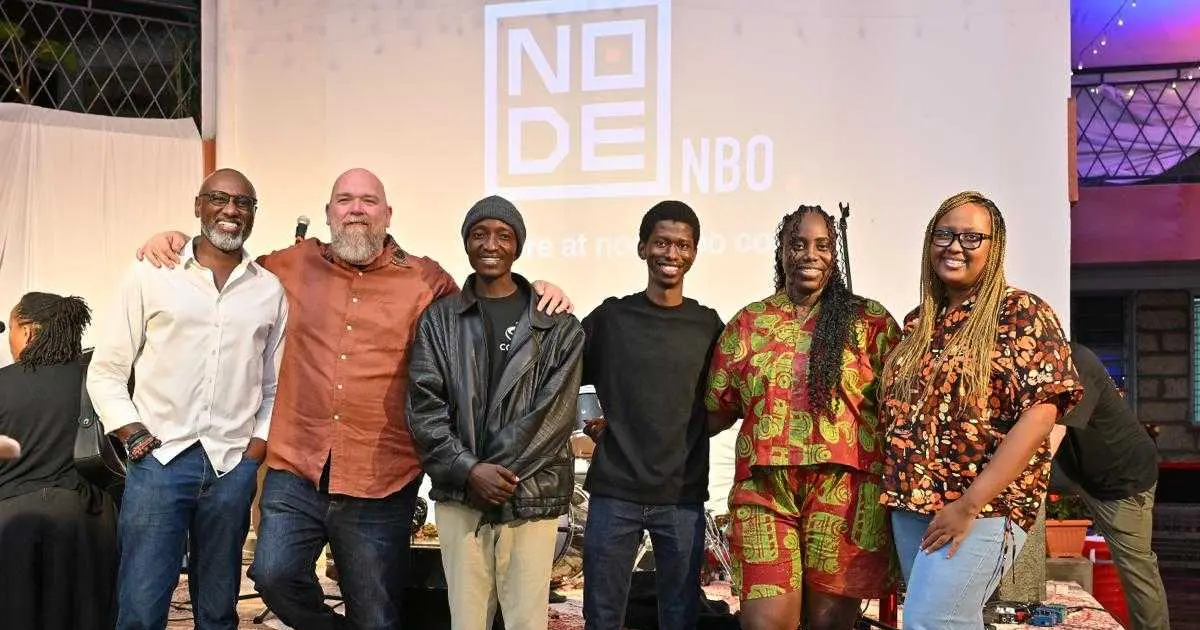
On Saturday, May 16, 2026, the world’s newest physical Bitcoin space opened in Nairobi, Kenya.
It’s called Node NBO (NBO is short for Nairobi), and it will serve as a co-working space for notable Bitcoin, freedom tech, compute, and energy companies and organizations in Africa, including Fedi, Gridless, and BTrust as well as the Human Rights Foundation (HRF).
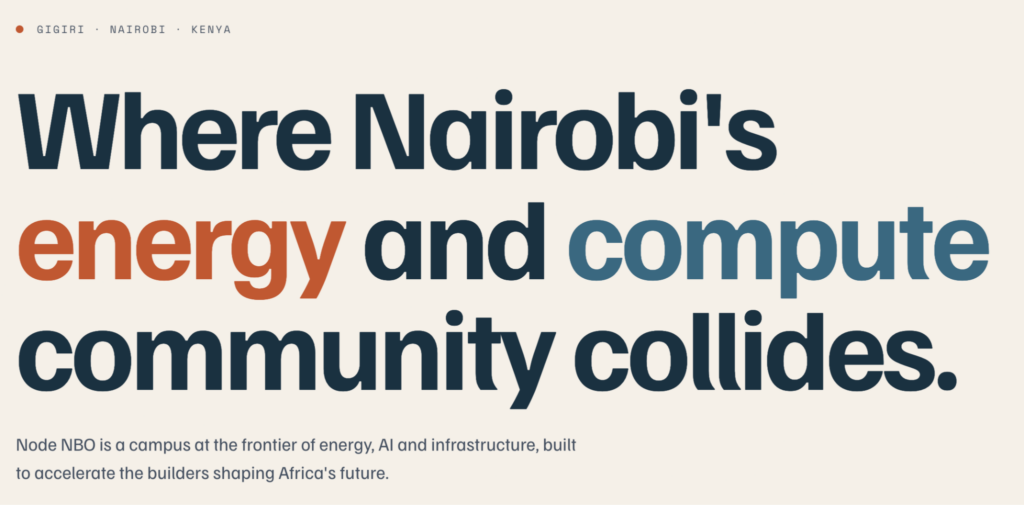
A screenshot from the homepage of the Node NBO website.
The facility will also be home to three labs — an open-source energy lab, an open-source Bitcoin mining lab, and an AI compute lab. These labs will serve as places where teams can build, design, and assemble new products as well as strategize implementation.
And Node NBO also has an event space, where just over 150 people can gather for special occasions and meetups.
The first of such occasions was the soft launch of the facility on May 16th, which was attended by Fedi CEO Obi Nwosu; Gridless’ co-founders, Janet Maingi, Erik Hersman and Philip Walton; BTrust CEO Abubakar Nur Khalil; and Minmo CEO Jodom Konuko (Minmo team members will also work out of Node NBO) amongst a number of other notable members of the Kenyan Bitcoin community.
BitDevs Nairobi attendees as well as quantum computing researchers and developers from Nairobi will also meet in the event space on a monthly basis.
“We needed a place where people who are working on hard things can come into proximity with each other, especially when there’s overlapping areas that need specialization,” said Hersman in regard to the impetus behind creating Node NBO.
“We wanted to get the people behind this foundational layer of this tech we’re all using in a place where they can find each other, work on cool stuff around each other, and accelerate each other,” he added.
“We couldn’t be more excited to be part of Node NBO,” said Nwosu. “There’s so much synergy already happening between the companies and organizations involved with Node NBO that it just makes sense to bring them all under one roof.”
Showcasing African Projects to Global Visitors
Node NBO is located in Gigiri, Nairobi, a northern region of Nairobi that Hersman referred to as a “diplomatic area.”
Facilities in the area frequently host international visitors, as Gigiri is home to the United Nations’ Nairobi headquarters, which is just walking distance from Node NBO.
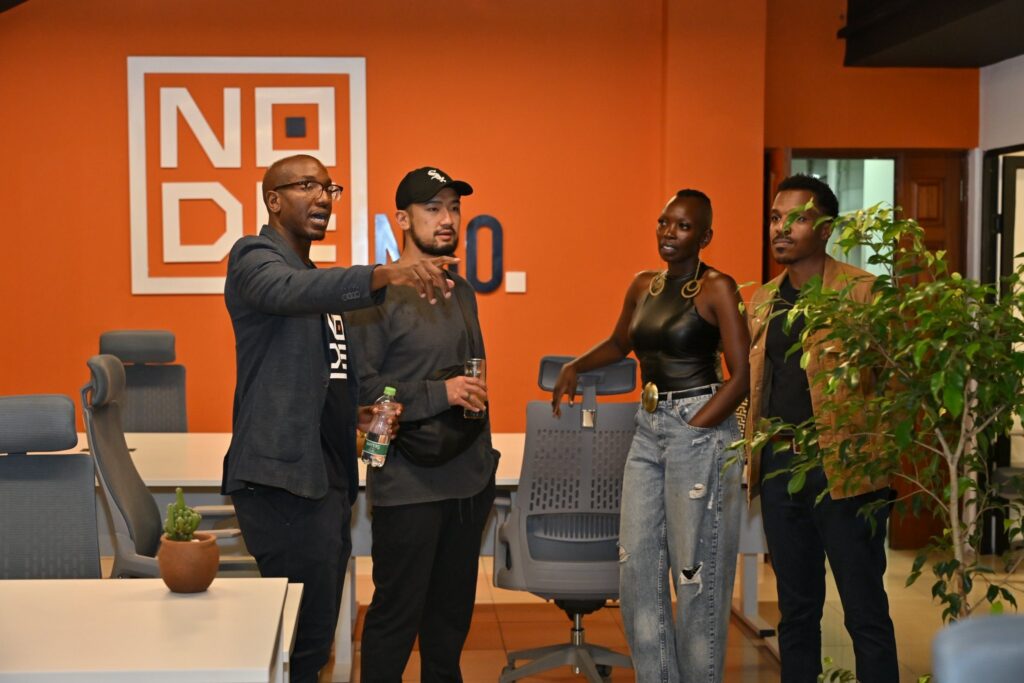
An image from inside the Node NBO facility. | Photo courtesy of Node NBO
Hersman noted that another reason for the space was that he, too, often hosts visitors from abroad, and he wanted to create a hub at which he could showcase the many different projects that are currently being developed in Africa.
“We’ve had everybody from team members from NVIDIA to the Rockefeller Catalyst Fund to high-level team members from Google and Microsoft come to visit and now we have a place where we can give people like this a tour of what’s happening,” said Hersman.
A Unique Facility for Unique Infrastructure Companies
The new facility will be unique in that it will be powered solely by solar panels.
“Gridless is putting in solar power over the whole facility so that it actually runs fully off of its own energy,” said Hersman.
This is the sort of ingenuity that Gridless has become well known for.
In its four years of existence, it hasn’t just capitalized on mining bitcoin with renewable, hydro energy in rural Kenya, Malawi, and Zambia, and it’s created a model that has catalyzed the electrification of these rural regions while keeping the cost of electricity for residents of these regions low.
Now its team members will be officemates with team members of a Fedi partner enterprise called SateNet.
SateNet is a project through which physical towers that broadcast satellite internet are installed in underserved communities such as Kenya’s Kibera, home to the Afribit community, and South Africa’s Mossel Bay, home to the Bitcoin Ekasi community.
Through SateNet, residents of these communities can purchase high-speed internet at low rates when they pay in bitcoin via the SateNet Mini App, available via the Fedi app.
“With Bitcoin and other freedom technologies, people need the internet to use them,” said Nwosu. “This was one of the main reasons why we decided to help the communities with whom we work to gain access to more affordable internet via SateNet.”
The local community will come to share ownership and management of the internet infrastructure, enabling the internet to become a self-sustaining local utility.
“Node NBO is a space to help showcase the infrastructure of this new technology — the actual steel and silicon of the stuff,” said Hersman. “We’re telling the story about how Africa has these companies that have a stake in the ground as far as infrastructure.”
Working Together the Kenyan Way
According to Hersman, many important decisions in Kenya are made in a communal fashion and he feels that Node NBO can serve as a hub at which such types of decisions can be made.
“The Kenyan way of doing things requires people to see each other face to face from time to time,” explained Hersman. “We come together as a community to make decisions.”
And this is no different when it comes to Nairobi’s Bitcoin community.
“The Bitcoin community that builds most things in Kenya is here in Nairobi,” said Hersman.
“We work with each other. We don’t compete against each other,” he added.
“So, this is part of the culture of who we are well before any of this technology — this is just part of Kenya.”
This article was reposted from Fedi’s blog, and is also available here.
This is a guest post by Frank Corva, who is a content producer at Fedi. Opinions expressed are entirely their own and do not necessarily reflect those of BTC Inc or Bitcoin Magazine.
This post New Bitcoin, Energy, and Compute Hub Node NBO Opens in Nairobi, Kenya first appeared on Bitcoin Magazine and is written by Frank Corva.








 Lietuvių kalba
  English
  Română
  Eesti
Eesti  한국어
한국어  日本語
日本語  Русский
  Deutsch
  Español
  简体中文
简体中文  Français
  繁體中文
繁體中文  Português
  Italiano
  Polski
  Türkçe
  Nederlands
  Bahasa Indonesia
  Ελληνικά
  Українська
  Български
  Čeština
  Suomi
Suomi  Magyar
  Latviešu valoda
  Norsk bokmål
  Slovenčina
  Slovenščina
  Svenska
Parašykite komentarą